Best AI fashion model APIs in 2026: virtual model and on-model photo APIs compared
Compared on published docs and pricing, read October 7, 2026
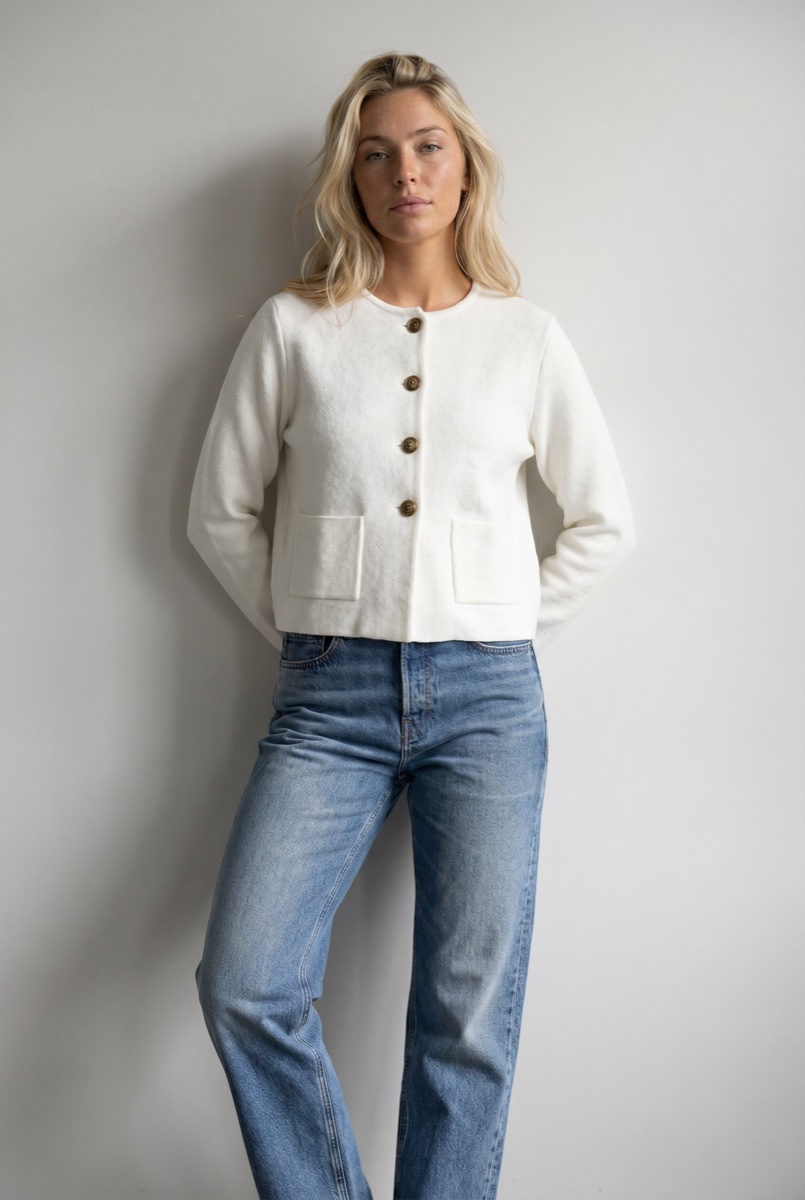
A fashion model API takes a garment photo, such as a flat lay or a ghost-mannequin shot, and returns a photo of a model wearing it. Eight vendors are compared below on what an integrator needs to know: the endpoints, the price per image with its resolution and model, the output resolution, async jobs and webhooks, who checks the output, rate limits, SDKs and agent access.
Disclosure. Uwear makes one of the tools compared here. We compared the others on their published capabilities, documentation and pricing as of October 7, 2026; we did not test them hands-on. Uwear facts come from its own API page and agent reference; every claim about another vendor is numbered in the sources at the bottom.
Short answer. There is no single best API; it depends on who checks the output. Claid suits pipelines that chain many image operations. FASHN suits a low price per image at up to 4K with official SDKs, if your team builds the review step. Photoroom suits teams already on its editing API or wanting a contractual guarantee on Enterprise. Uwear suits a catalog pipeline that should get checked images back: one request carries the garment, a saved model, a saved art direction and an AI reviewer that can retry what fails. Botika documents no public API.
What each fashion model API generates, and what it costs per image
| API | Best for | Garment to model | Same model across calls | Video | Max output | Price per image: resolution and model |
|---|---|---|---|---|---|---|
| Botika [32][33] | Merchants who want an app with human retouching, not an API | In the app only: on model, flat lay, mannequin | Exclusive custom models on Enterprise | In the app, 5 credits a video | 2K on Pro, 4K on Advanced | No API price; app plans from $46 a month billed yearly |
| Claid [17][18][19][20][21][22][23][24] | Ecommerce image pipelines where the on-model photo is one step among many | AI fashion from flat lay or ghost mannequin, up to 5 garment images, 1 to 4 outputs | Model library or your own model images; face swap; 8 preset poses | AI video, 35 credits for 5 seconds | Native 2K and 4K, per its Enterprise API page | 2 credits an image, $59 for 1,000 credits: about $0.12; resolution not stated on the fashion endpoint page; model not named. One-time API packs |
| FASHN [6][7][9][10][11] | Developers who want low-cost, high-resolution fashion endpoints and will build the pipeline | Product to Model, Try-On Max, Model Swap, Model Create, Edit, Reframe | A face reference per request, +3 credits an image | Image to Video, 1 to 6 credits for 5 seconds (480p to 1080p) | 4K | Product to Model at 2K: 2 to 4 credits by mode, $0.15 to $0.30 on demand (1K from $0.075); FASHN’s own models, the one behind each mode not named. Commitment tiers to $0.0488 a credit |
| Modelia [27][28] | Small teams that want API access and 4K output from a $30 plan | Flatlay to Model, Mannequin to Model, Model to Model | Not documented on the API page | No video endpoint on the API page | 4K (16K on the Brand plan) | 3 credits an image at 2K or 4K; packs from $30 for 150 to $150 for 1,000 credits: $0.45 to $0.60 at 2K; model not named |
| Photoroom [12][13][14][15][16] | Teams already on Photoroom for editing, and enterprises that want a contractual guarantee | Virtual Model from a flat lay or ghost mannequin: 16 preset models, 23 scenes, 12 poses | Your own brand model image, passed per request | Image to Video in the Enterprise API plan | 1K on Plus; 2K and 4K on Enterprise only | 1K only on Plus: $0.10 an image, billed monthly. 2K and 4K on Enterprise only: custom, annual, 200K images a year minimum. Model not disclosed |
| The New Black [25][26] | Low cost per image with high request limits on every plan | Up to 3 product images, a described or uploaded model, a scene | A model image passed per request | About 10 credits a video on the platform | 4K on the ultra tier | Standard 1 credit, pro 3, ultra 7 at 4K; resolution of standard and pro not stated; model not named. Starter $15 a month for 200 credits: about $0.075 standard, $0.53 at 4K. Credits roll over while the plan is active, capped |
| Uwear [1][2][3][4][5] | Catalog pipelines that need checked images back, not raw generations | Garment records in, on-model photos out; edits, upscales and video on the same route | Saved model and saved art direction, reused by ID on every request | From an approved still; Kling 3 Pro 5 seconds is 23 credits | 4K, depending on the image model | Model picked per run and named: 5 credits ($0.50) at 2K on Gemini 2.1 (Nano Banana 2.1), the default and recommended model; 6 credits ($0.60) at 2K on GPT Image 2.5 (High); 2 credits ($0.20) at 1K or 2K on GPT Image 2 (low), the budget option. $0.10 a credit, pay as you go, no cap, credits never expire |
| VModel [29][30][31] | A cheap try-on call that puts a garment on a person photo you supply | Try-On: a garment image and a person image | Your own person image, passed per call | Not part of the Try-On endpoint | Not published | $0.12 per use; resolution and model not published |
Listed alphabetically; the order is not a ranking. Prices are per generated image before volume discounts, at 2K where the vendor publishes a 2K rate, with the resolution and model stated wherever the vendor states them. Uwear rates vary by image model and resolution; the full table is on the models page.
Why per-image prices mislead
A headline price is usually the vendor's cheapest setting: the lowest resolution and the fastest model, so a 1K draft from one API sits next to a 2K catalog image from another, and most of these vendors do not say which model they run. None of the prices includes retakes, and none includes your team's time re-describing the model, fixing drift and checking images, which is what tooling saves: on Uwear, a saved model and a saved art direction, batch runs of up to 10,000 items, automations and the optional reviewer. Compare cost per approved image on your own garments, at the same resolution.
How each API fits into your pipeline: webhooks, checks, limits and SDKs
| API | Async and webhooks | Built-in check and retry | Default rate limit | SDKs and agent access |
|---|---|---|---|---|
| Botika [32][33] | No public API documented | Human retouch rounds; white-glove QC on Enterprise | No public API documented | No public API documented |
| Claid [17][18][19][20][21][22][23][24] | Async jobs with HMAC-signed webhooks | An image-checks stage in its documented workflow | 4 requests a second, 120 a minute; the fashion endpoint 60 generations a minute | REST docs; 20+ operations chainable in one request |
| FASHN [6][7][9][10][11] | Yes: polling or webhooks | Not documented; failed predictions cost nothing | 50 run requests a minute, 6 at once | Official Python and TypeScript SDKs; an agent skill for coding agents |
| Modelia [27][28] | Async tasks with webhooks | Not documented | Not published | REST with an API key from the dashboard |
| Photoroom [12][13][14][15][16] | Synchronous, one image per call, calls in parallel | Its Virtual Model page says quality checks flag distortions; Visual QA and the Enterprise Guarantee are on Enterprise | 60 images a minute by default | OpenAPI spec; an MCP connector for Claude that includes Virtual Model |
| The New Black [25][26] | Yes: polling or webhook; results kept 48 hours | Not documented | 30 to 300 calls a minute by plan | REST docs; an MCP server for Claude |
| Uwear [1][2][3][4][5] | Yes: polling or signed webhooks | Yes, per request: an opt-in AI reviewer checks each image and retries what fails if you set a retry count (default 0), 1 credit a photo | Not published; confirm your account limits | REST plus UWEAR.md; remote MCP server for ChatGPT, Claude and Codex; no official SDK |
| VModel [29][30][31] | Tasks with a webhook URL or polling | Not documented | 600 task requests a minute | HTTP examples in the docs |
What to check before you choose a fashion image API
Who checks the output. An API reports whether a job finished, not whether the jacket has the right number of buttons. If the API has no check, your team or your code reviews every image, and that labor is part of the price.
Whether the model stays the same. A catalog reads as one shoot only if the face, the light and the framing repeat. Ask whether the model is a saved object you reference, or an image you resend with every call.
How jobs come back. Image generation takes seconds to minutes. Webhooks let a catalog run finish without your service holding a connection open; check how long result URLs live before you must copy the files.
The resolution and the model you are billed for. Some plans cap output at 1K and reserve 2K and 4K for enterprise contracts, and most vendors do not name the image model. Product pages usually need at least 2K, so compare prices there.
Which API fits which job
Each API sits under the job it fits best, in alphabetical order. None is ranked above another: the right one depends on who checks the output and how much of the pipeline your team wants to build.
Best for an app with human retouching, not an API: Botika
Botika is an app, not an API: we could not find a public one. Its pricing page and FAQ describe the web app, the Shopify app and the iOS app, with 1 credit a photo, 5 a video, retouch rounds and white-glove quality control on Enterprise, and mention no API; botika.com/api returns a not-found page. If you need Botika's output in a pipeline, ask its sales team. [32][33]
Best when on-model is one step in a longer image pipeline: Claid AI Fashion Models API
Claid's fashion endpoint takes up to five garment images and returns one to four on-model images, from its model library or from model photos you have the rights to, with eight preset poses and face swap for localized campaigns. The real draw is the rest of the API: more than 20 operations, such as background generation, upscaling and resizing, chainable in one request, with async jobs and HMAC-signed webhooks. [17][18][20][22][23]
AI fashion is 2 credits an image and self-serve API credits start at $59 for 1,000, about $0.12 an image; API and web credits are separate pools. Default limits are 4 requests a second and 120 a minute, with the fashion endpoint at one generation a second. Its workflow example includes an image-checks stage, and the Enterprise API adds custom SLAs, higher limits and forward-deployed engineers. [18][19][21][23][24]
Watch for: Claid is a general ecommerce image platform; a saved art direction that a whole range reuses is not documented, and the fashion endpoint's own page does not state an output resolution. Uwear vs Claid
Best for developers who want low-cost fashion endpoints: FASHN
FASHN is built for developers. Its API covers Product to Model (flat lay or ghost mannequin in), Try-On Max (up to 4K), Model Create, Model Swap, Face to Model, Edit, Reframe, Background Remove and Image to Video, with official Python and TypeScript SDKs and an installable skill that teaches coding agents the API. [6][11]
Pricing is unusually clear: $0.075 a credit on demand with a $7.50 minimum, image endpoints from 1 to 5 credits by mode and resolution (1K to 4K), commitment tiers down to $0.0488 a credit, and failed predictions cost nothing. Note that the $0.10 a credit on FASHN's main pricing page is the app top-up, not the API rate. Jobs are async with polling or webhooks, under default limits of 50 run requests a minute and six at once. Default output links expire after three days. [7][8][9]
Watch for: Product to Model takes one product image and returns one to four images per request; model identity is a face reference resent per request at 3 extra credits an image. No automatic visual check is documented, so a wrong button counts as a successful prediction. The catalog logic, review and retries are yours to build. [10] Uwear vs FASHN
Best for API access and 4K output on a small plan: Modelia
Modelia's REST API has Flatlay to Model, Mannequin to Model and Model to Model endpoints plus background removal, outpainting and upscaling, as async tasks with webhooks, up to 4K. API access starts on the $30 Creator plan; a standard image is 3 credits, and credit packs run from $30 for 150 to $150 for 1,000, so $0.45 to $0.60 an image at 2K or 4K. [27][28]
Watch for: no video endpoint on the API page, and no published rate limits or saved-model feature.
Best if you already use Photoroom's editing API: Photoroom Virtual Model API
Virtual Model is a parameter set on Photoroom's image editing endpoint: send a flat lay or ghost-mannequin photo and pick from 16 preset models, 23 scenes and 12 poses, or pass your own brand model and scene images. It sits beside background removal, ghost mannequin, product staging and virtual try-on in one API, and Photoroom offers an MCP connector for Claude that includes Virtual Model. [12][13][16]
The Plus plan is $0.10 an image, billed monthly, with watermarked sandbox calls for testing. Output is 1K on Plus; 2K and 4K are Enterprise only. Enterprise is an annual commitment with a 200K-image minimum and adds Visual QA, Image to Video and the Enterprise Guarantee. Calls are synchronous, one image per call, at 60 images a minute by default. [13][14][15]
Watch for: the resolution most product pages need, and the quality tooling, sit behind the 200K-image Enterprise commitment. We found no webhooks in its API docs. Uwear vs Photoroom
Best for low cost per image with high request limits: The New Black
The New Black's AI Fashion Models API takes up to three product images, a described or uploaded model and a scene, and returns an ecommerce photo asynchronously, with polling or a webhook. It costs 1 credit for standard, 3 for pro and 7 for ultra at 4K; the $15 Starter plan has 200 credits, about $0.075 a standard image at a resolution it does not state. Every plan includes API access, from 30 calls a minute on Starter to 300 on Enterprise, and it lists an MCP server for Claude. [25][26]
Watch for: results are kept for 48 hours, and no check or retry step is documented.
Best for catalog pipelines that need checked images back: Uwear
The Uwear REST API runs at api.uwear.ai with a Bearer key. You create a clothing item for each garment, then send one generation request per garment, shot or variant, with up to five images each. The request names the image model, the camera, the resolution, a saved model (avatar_id) and a saved art direction (art_direction_id), so every call in a range reuses the same person and the same set. Edits, upscales and video use the same route, with an approved result as the source. [1][2]
The difference from the other APIs here, on their published docs, is the check. Set QA on the request (do_qa) with a retry count (max_qa_retries, 0 to 5, default 0), and an AI reviewer compares each image with each garment's photo, the saved model and the prompt, records the reason for a rejection and retries. The verdict comes back on the result record as qa_status and qa_decision, next to your SKU metadata. The reviewer is 1 credit a photo and each retry is billed as a new generation. [1][3]
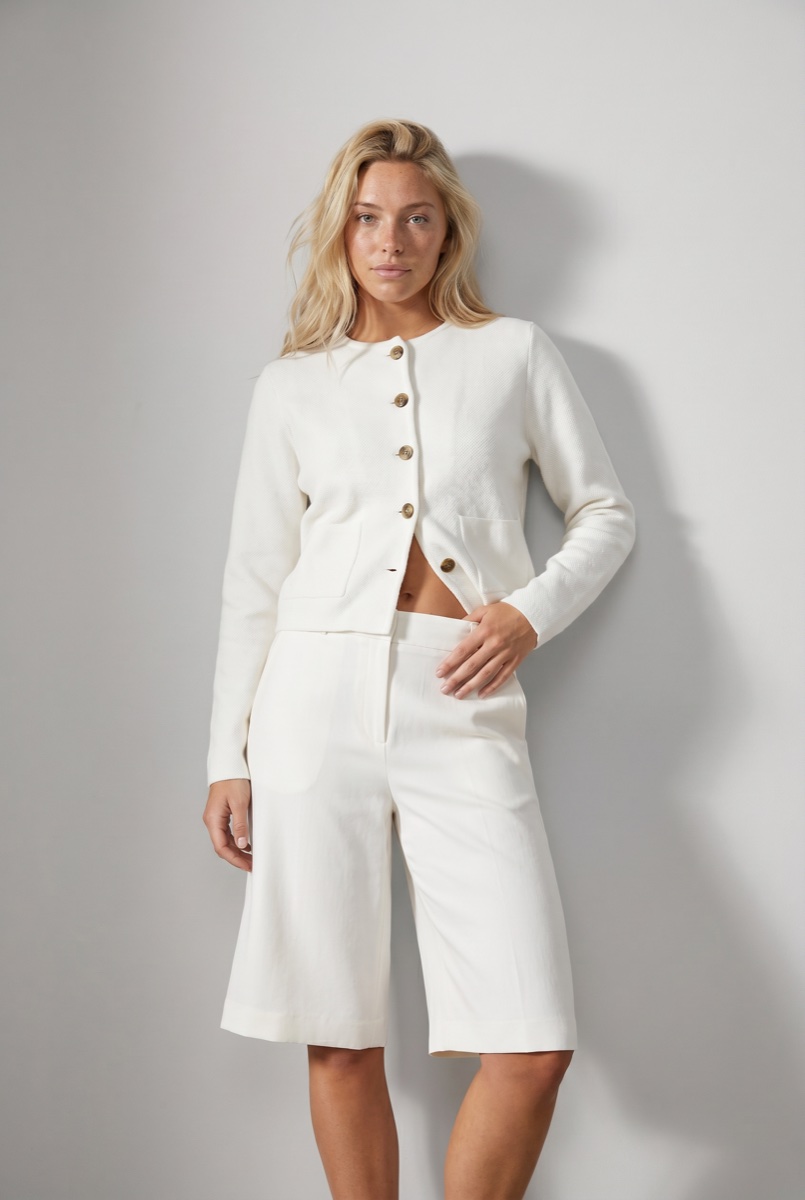
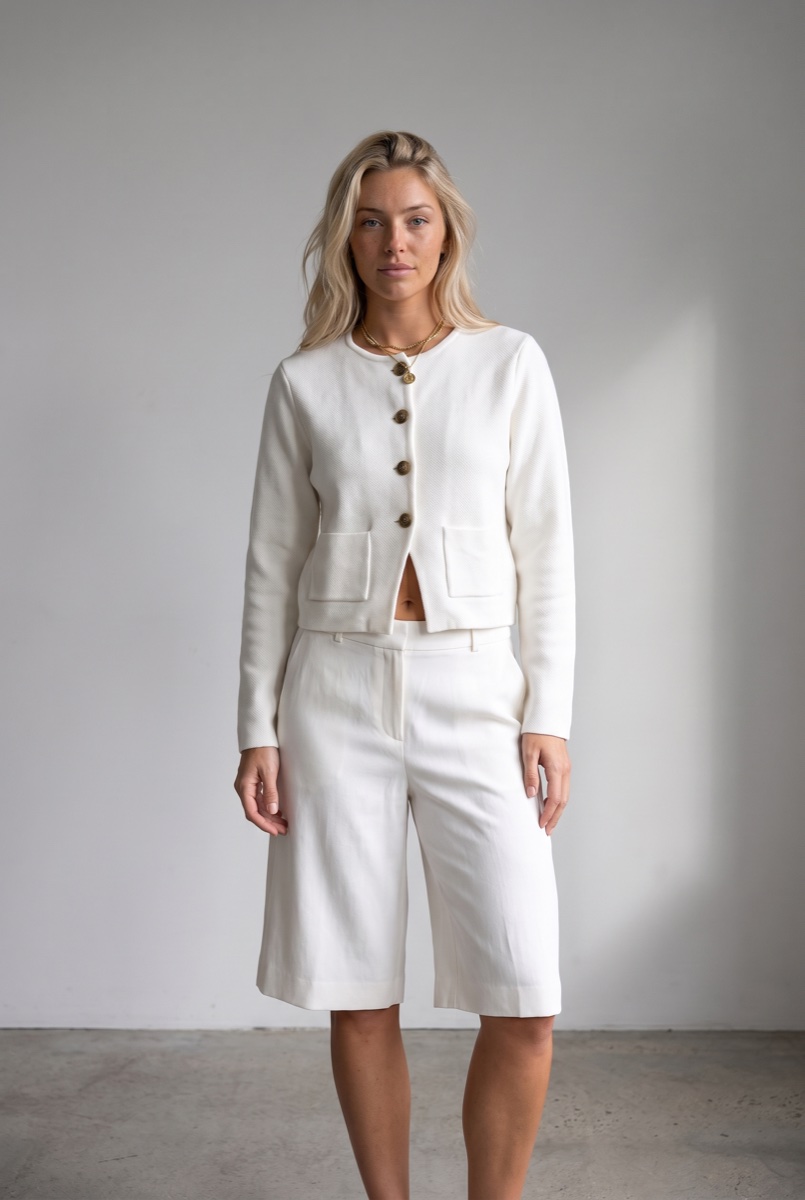
Jobs are async: poll the generation, or receive a signed webhook on completion or failure. Result URLs are temporary, so copy approved files to your own storage when they arrive. Credits are $0.10, and the request names the image model, so the price follows the model. The default and recommended model is Gemini 2.1 (Nano Banana 2.1), the most recent and best-performing model Uwear offers, at 5 credits ($0.50) for 2K; GPT Image 2.5 (High) is 6 credits ($0.60). The budget option is GPT Image 2 (low) at 2 credits ($0.20) for 1K or 2K. We recommend paying more for the recent models: they tend to hold garment detail, prints and logos better and need fewer retakes, so the cost per approved image can end up close. Test both on your own garments. A 5-second Kling 3 Pro clip from an approved still is 23 credits. [1][2][4]
For agents, Uwear runs a remote MCP server, the connector that lets ChatGPT, Claude or Codex plan a shoot, show a costed brief and run it after you approve. For code, UWEAR.md is a single reference file a coding agent can load. The same results reach your store through the integration guides, and a published automation can start itself when a garment, tag or outfit arrives. [2][5]
Watch for: on the default model, a higher price per 2K image than FASHN's Product to Model ($0.50 against $0.15 to $0.30 on demand; FASHN does not name its model); GPT Image 2 (low) at $0.20 sits inside FASHN's range. No rate limits are published (the reference tells integrators to queue conservatively and confirm account limits), there is no official SDK, and the API reference documents one job per garment or shot rather than a single bulk endpoint; the Studio takes a CSV of up to 10,000 items for batch runs. [2]
Best for a cheap garment-onto-person call: VModel Try-On
VModel's Try-On endpoint costs $0.12 per use: you send a garment image and a person image, and it returns the person wearing the garment. Tasks are async with a webhook URL or polling, at up to 600 task requests a minute. [29][30][31]
Watch for: you supply the person photo, so it suits try-on features in an app more than a catalog of on-model product photos.
Is the cheapest call the cheapest image?
Not always. Every API above prices the generation, and only some say what happens when the generation is wrong. On FASHN a failed prediction is free, but an image with the wrong collar is a success and costs full price; finding it is your team's job. On Uwear the reviewer adds 1 credit a photo and a retry is billed as a new generation, and the MCP brief shows the credit cost before generation, and the automation builder shows the worst case with QA re-shoots before you publish. The number to compare is the cost per approved image plus the hours your team spends getting there: a person at a screen, or a check in the loop.
How we compared these APIs
We read each vendor's API page, reference docs and pricing on October 7, 2026, and recorded only what they publish: endpoints, inputs, outputs per request, resolution, price per image at 2K where published, with the resolution and model behind each price, async and webhook support, documented checks, rate limits, SDKs and agent access. Where a vendor publishes nothing on a point, the table says so. We did not test the other APIs hands-on, and the APIs are grouped by the job they fit, not ranked. Uwear facts come from the Uwear API page, UWEAR.md and the models page. Prices change often; check the sources before you commit.
Questions developers ask about fashion model APIs
What is the best AI fashion model API in 2026?
The best one depends on the job, mostly on who checks the output. Claid fits pipelines that chain many image operations. FASHN fits a low price per image at up to 4K with official Python and TypeScript SDKs, if your team builds the review step. Photoroom fits teams already on its editing API or wanting a contractual guarantee on Enterprise. Uwear fits a catalog pipeline that should get checked images back: one request carries the garment, a saved model, a saved art direction and an AI reviewer that can retry what fails, with webhooks and a remote MCP server. Uwear publishes this comparison and did not test the other APIs hands-on.
Which APIs turn a flat lay or garment photo into an on-model photo?
Claid (AI fashion, up to five garment images per request), FASHN (Product to Model), Modelia (Flatlay to Model and Mannequin to Model), Photoroom (Virtual Model on its edit endpoint), The New Black (up to three product images) and Uwear (garment records sent to its generation route). VModel Try-On needs a person photo as well as the garment. Botika does this in its app; no public API is documented.
Which fashion image API is cheapest per image?
It depends on the resolution and the model, so compare like for like. At 2K, from published prices on October 7, 2026: FASHN Product to Model $0.15 to $0.30 on demand by mode, Modelia $0.45 to $0.60, Uwear $0.50 on Gemini 2.1 (Nano Banana 2.1), its default and recommended model, $0.60 on GPT Image 2.5 (High) or $0.20 on GPT Image 2 (low), the budget option; Photoroom offers 2K only on Enterprise. The lowest headline prices are 1K or unstated: The New Black about $0.075 for a standard image, Photoroom Plus $0.10 at 1K, Claid about $0.12, VModel $0.12. Most vendors do not name the model, and no price includes retakes or the time your team spends reviewing, so compare cost per approved image on your own garments.
Which fashion image APIs check the output and retry failures?
Uwear documents it per request: turn on QA and set a retry count, and an AI reviewer compares each image with the garment, the saved model and the prompt, records the reason for a rejection and retries; the verdict comes back on the result. Photoroom says its Virtual Model runs quality checks for distortions and lists Visual QA and its Enterprise Guarantee on Enterprise. Claid shows an image-checks stage in its workflow example. FASHN does not charge for failed predictions but documents no visual check. The others document none.
Which APIs keep the same model across a whole catalog?
Uwear saves the model and the art direction as objects you reference by ID on every request, and its reviewer, when on, checks that the face matches the saved model. Photoroom and Claid accept your own model image; Claid also offers face swap. FASHN takes a face reference per request at 3 extra credits an image. The New Black takes a model image per request.
Can an AI assistant call these APIs for me?
Uwear runs a remote MCP server, so ChatGPT, Claude and Codex can plan a shoot, show a costed brief and run it after you approve. Photoroom has an MCP connector for Claude that includes Virtual Model, and The New Black lists an MCP server for Claude. FASHN ships an installable skill that teaches coding agents its REST API and SDKs.
Sources
Each page was read on the access date. Vendor prices and limits change; the numbers in the tables refer to these pages.
- [1] Uwear fashion image generation API. Accessed October 7, 2026.
- [2] UWEAR.md, the Uwear API reference for agents. Accessed October 7, 2026.
- [3] Uwear QA and retries. Accessed October 7, 2026.
- [4] Uwear models and credit rates. Accessed October 7, 2026.
- [5] Uwear MCP server. Accessed October 7, 2026.
- [6] FASHN API. Accessed October 7, 2026.
- [7] FASHN API pricing. Accessed October 7, 2026.
- [8] FASHN app pricing. Accessed October 7, 2026.
- [9] FASHN API fundamentals. Accessed October 7, 2026.
- [10] FASHN Product to Model reference. Accessed October 7, 2026.
- [11] FASHN agent skill for coding agents. Accessed October 7, 2026.
- [12] Photoroom Virtual Model API. Accessed October 7, 2026.
- [13] Photoroom Virtual Model documentation. Accessed October 7, 2026.
- [14] Photoroom API pricing. Accessed October 7, 2026.
- [15] Photoroom API FAQ. Accessed October 7, 2026.
- [16] Photoroom MCP. Accessed October 7, 2026.
- [17] Claid AI Fashion Models API. Accessed October 7, 2026.
- [18] Claid AI Fashion Models I/O. Accessed October 7, 2026.
- [19] Claid API pricing. Accessed October 7, 2026.
- [20] Claid for Business. Accessed October 7, 2026.
- [21] Claid async API reference. Accessed October 7, 2026.
- [22] Claid API workflows. Accessed October 7, 2026.
- [23] Claid Enterprise API. Accessed October 7, 2026.
- [24] The New Black AI Fashion Models API. Accessed October 7, 2026.
- [25] The New Black pricing. Accessed October 7, 2026.
- [26] Modelia API. Accessed October 7, 2026.
- [27] Modelia pricing. Accessed October 7, 2026.
- [28] VModel Try-On. Accessed October 7, 2026.
- [29] VModel API webhooks. Accessed October 7, 2026.
- [30] VModel API rate limits. Accessed October 7, 2026.
- [31] Botika pricing. Accessed October 7, 2026.
- [32] Botika FAQ. Accessed October 7, 2026.