Best AI fashion photography platforms for enterprise retail (2026)
At enterprise volume the question is not whether AI can make a good on-model photo. It is what happens to the ones it gets wrong, who catches them, what you pay for them, and how the approved ones get into your PIM, DAM and storefront. This roundup compares seven platforms on those questions, using only what each vendor publishes, read on October 7, 2026, and groups them by the job each fits best rather than ranking them. The gaps in Uwear's column are stated as plainly as the strengths.
Disclosure. Uwear makes one of the tools compared here. We compared the others on their published capabilities, documentation and pricing as of October 7, 2026; we did not test them hands-on.
Short answer. If procurement needs a contractual fidelity guarantee and native PIM or DAM connectors today, start with Photoroom Enterprise. If you want a vendor to own production and quality end to end, Stylitics AI Image Studio is fully managed with human review and a remake-or-refund promise, and Looklet adds real digitized models and its own studio hardware. If your team wants to run production itself, with an AI reviewer and retries you can switch on for every image, batches of up to 10,000 images, an API, an MCP server and triggers, and a published per-credit price, that is Uwear, with two gaps you should weigh: no packaged PIM or DAM connector, and no published enterprise case studies. Claid and FASHN fit engineering teams building their own pipeline; Botika fits teams that want a human retouching service on top of an app.
The seven platforms side by side
Listed alphabetically; the order is not a ranking. Numbers in brackets point to the sources at the end. Where a cell says a page did not state something, it means we did not find it on the vendor pages we read, not that it does not exist.
| Platform | How it runs | When an image fails | Your systems | Security and data | Price published, with resolution and model |
|---|---|---|---|---|---|
| Botika Enterprise [27] | Self-serve app plus a human quality service | White-glove QC by a dedicated team; retouch rounds; fixes at no extra cost | Shopify app; no public API documentation found | Not stated on the pages we read | Pro from $46 a month billed yearly, about $0.92 a 2K photo with retouch rounds; model not named; Enterprise custom |
| Claid [25][26] | Image API platform plus custom solutions | An image-checks stage in pipelines you build; custom pipelines built by Claid teams | API that connects to CMS, PIM or upload flows; batch, async jobs, webhooks | Preparing for SOC 2 Type II; GDPR and CCPA; no training on customer data | API from $59 for 1,000 credits, operations 1 to 10+ credits; resolution and model not stated; enterprise plans with SLAs |
| FASHN [28][29][30][31][32] | Developer API and app | Technical failures are not charged; quality review is yours to build | REST API, Python and TypeScript SDKs, webhooks | No training on customer content without opt-in; no certification on the pages we read | $0.075 a credit on demand, so $0.15 to $0.30 a 2K product-to-model image (2 to 4 credits); model not named; Tier III $1,249 a month |
| Looklet Enterprise [21][22][23][24] | Studio hardware and software, or Image to Model from existing photos | A final personal QC check; QC and retouching on Enterprise | Exports metadata-rich images for e-commerce, PIM and DAM; no connector named | Not stated on the pages we read | Enterprise custom; Virtual Studio $1,500 for 100 images to $9,000 for 1,000 ($15 to $9 an image); resolution and model not stated |
| Photoroom Enterprise [9][10][11][13][14] | Platform plus an enterprise service (Visual Agents) | Each output is scored and regenerated until it passes your threshold; borderline cases go to people. Enterprise Guarantee: pay only for outputs that pass | Native connectors for "the main PIM, DAM, and cloud platforms" (not named), REST API | SOC 2 Type 2 scoped to the API (April 2026 report), GDPR, DPA, 99.9% uptime target | Custom annual; API Enterprise has a 200K-image minimum; model not disclosed |
| Stylitics AI Image Studio [17][18][19][20] | Fully managed service | AI QA agents, then human QA before delivery; a miss is remade or refunded | PIM/DAM "via standard integrations"; images delivered back into your systems | No certification on the pages we read | Not published |
| Uwear [1][2][3][4][5][6] | Software your team runs (Studio, API, MCP, automations), with implementation support | An optional AI reviewer checks each image; with retries on, a failure is re-shot from the same request; a final failure is marked rejected, and you can override it. Retries are paid; no guarantee | REST API with webhooks, MCP server, store guides; no packaged PIM or DAM connector | AWS hosting, encryption in transit and at rest; generated images kept 90 days; no training on customer images unless a contract permits it; C2PA and watermark on files; no SLA | $0.10 a credit, no subscription: $0.50 at 2K on Gemini 2.1 (Nano Banana 2.1), the default and recommended model; $0.60 on GPT Image 2.5 (High); $0.20 at 1K or 2K on GPT Image 2 (low), the budget option; Enterprise volume pricing on request |
Seven questions that decide an enterprise shortlist
Stylitics' own enterprise roundup frames four of them well: what happens when the AI gets it wrong, whether it holds up at catalog scale, whether it plugs into existing systems, and who owns QC [17]. Looklet's buyer framework adds workflow fit, metadata and speed to publish [24]. Here are the seven we compared on.
1. What happens when an image fails
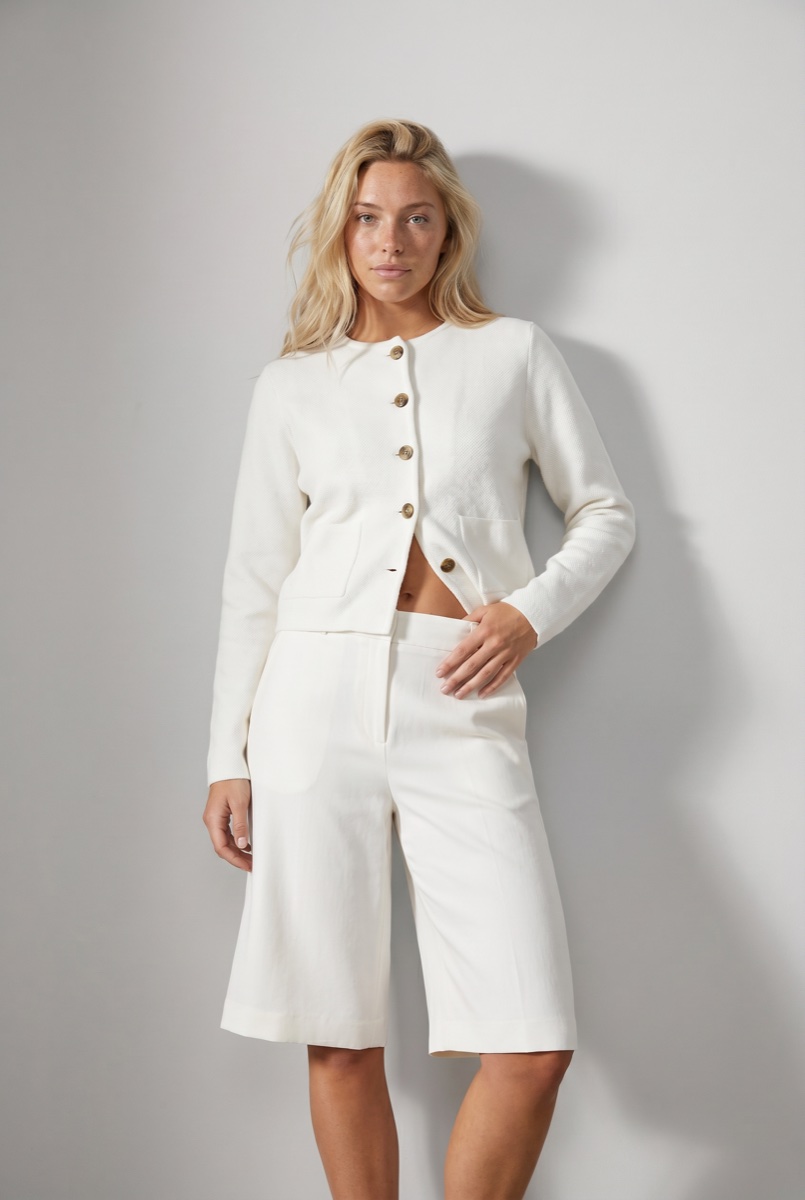
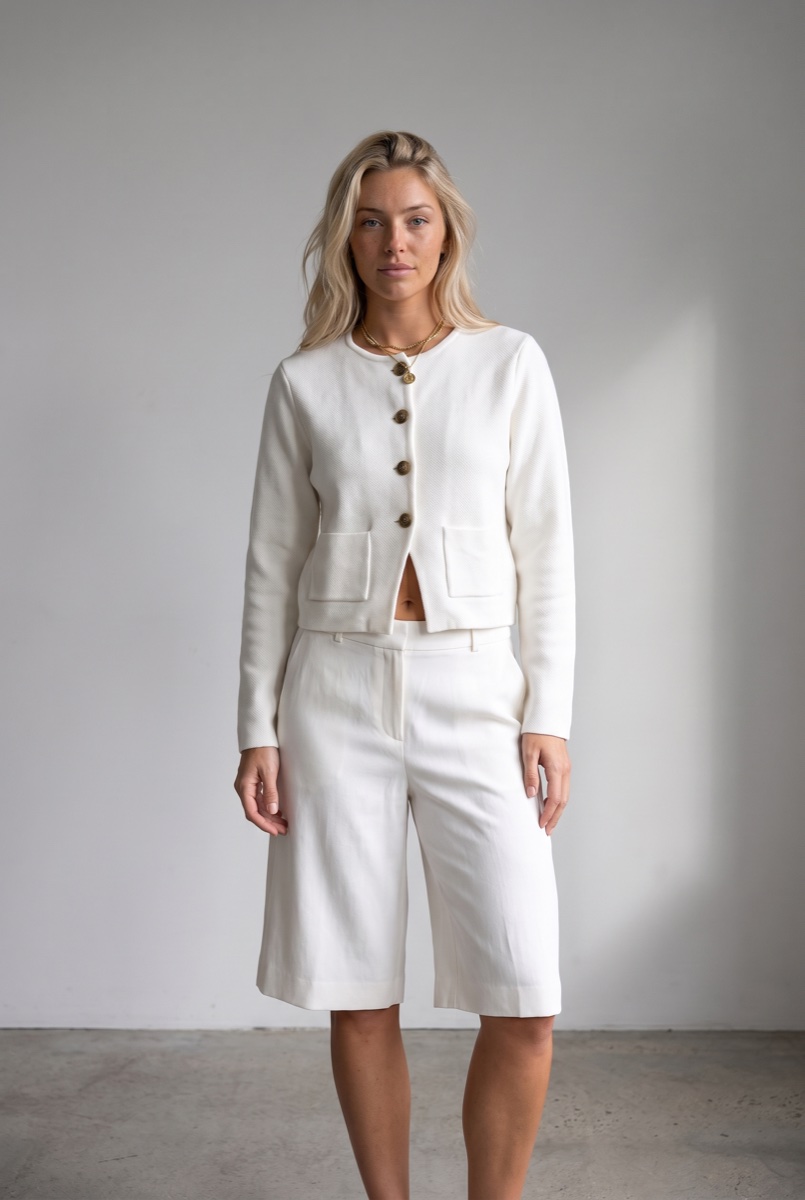
Every platform produces failures; Photoroom's own benchmark found the best frontier editing model kept product accuracy in 29% of outputs across 850 products and 3,400 generations, and its scoring-and-retry layer raised that to 38.2% [12]. That is a vendor benchmark on image editing in general, not fashion on-model generation, but it makes the point: ask where the check sits (inside the generation loop, or a person at the end), what it checks, what it does with a failure, and whether the reason is written down. The pair below is a real Uwear run: the reviewer rejected the first take for a button count and the retry passed.
2. Cost per approved image, not per generation
A per-generation price is the floor. The number procurement needs is everything paid divided by images approved: the first pass, the review, the retries, the human time, and any rejected image you are still billed for. Vendors split into two groups. Photoroom's Enterprise Guarantee says you pay only for outputs that pass, for food and fashion enterprise customers at mid-volume scale [11], and Stylitics remakes or refunds any image that misses your standards or SLA [18]; neither publishes the rate. FASHN does not charge for failed predictions, which means technical failures, not images you reject [30]. Uwear charges every generation and every retry. At the self-serve rate on Gemini 2.1 (Nano Banana 2.1), the default model, a 10,000-image run at 2K is 50,000 credits ($5,000) for the first pass and 10,000 credits ($1,000) for the reviewer; if you enable one retry, the estimate shown before you approve the run states the ceiling with that retry on every image, about $12,000 [1][2][3]. Where a run lands between the two depends on your garments, and Uwear publishes no pass rate, so measure it.
Per-image list prices mislead for the same reason. A headline price is usually the vendor's cheapest model and resolution, most vendors do not name the model, and no list price includes retakes or the team hours that tooling saves: saved models and art direction, batch runs of up to 10,000 items, automations and an optional reviewer. Compare the cost per approved image plus those hours, on the same garments at the same resolution.
3. First-pass quality versus after-retry quality
A vendor quoting a 99% pass rate may mean after retries, after retouching, or on a different job. Photoroom's Decathlon story, often quoted for its 99% cost reduction per image and 99% of product categories passing quality tests, is a packshot standardization project: background removal, shadows and batch editing of 35,000 existing images, with no on-model generation in it [15]. Ask every vendor for both numbers on your own garments: the share accepted on the first pass and the share accepted after the retry budget is spent.
4. The same model and art direction at volume
At 15,000 images a month the risk is drift: the model's face, the light or the crop changing across a season. Look for a saved model and a saved direction that every image reuses, and a check that compares each image with them. Looklet offers 1,000+ real digitized models [21]; Photoroom Visual Agents save and reuse custom models [10]; Botika builds exclusive models on Enterprise [27]; FASHN applies a Face Reference[28]. On Uwear the saved model and saved art direction are reused by every image in a run, and the reviewer, when on, checks each image for the same person [3]. RAWSHOT keeps a model consistent within a shoot but says setups cannot yet be saved for a later one [33].
5. API, PIM and DAM
Photoroom is the only vendor here that states native PIM, DAM and cloud connectors, though it does not name them [9]. Stylitics connects to your PIM or DAM through standard integrations as part of the managed service [19]. Claid's API takes images from a CMS, PIM or upload flow and returns results by webhook [26]. Uwear has a REST API with webhooks or polling, an MCP server (the connector that lets ChatGPT, Claude or Codex plan and run a job), and store guides for Shopify, Magento 2 and Adobe Commerce, WooCommerce, Amazon and Salesforce Commerce Cloud that describe the delivery adapter your team builds [4][5]. There is no packaged PIM or DAM connector. See the API and the integration guides.
6. Security and compliance
Photoroom publishes the most: SOC 2 Type 2 for its API with an April 2026 report, GDPR, a DPA, enterprise contracts that default to no training on your images, and a 99.9% uptime target [9][13]. Claid states GDPR and CCPA, no training on customer data, and that it is preparing for SOC 2 Type II [25]. Uwear does not use uploaded or generated customer images to train or fine-tune AI models unless a customer contract expressly permits it. It makes no SLA or uptime commitment. Its trust center lists the controls in its privacy policy (encryption in transit and at rest, AWS hosting, token-based API access) and keeps generated images 90 days. Delivered Uwear files carry an invisible watermark and, where the format supports it, C2PA origin metadata, both checked by a public verifier [6].
7. Managed service or platform your team runs
Stylitics says most teams spend under two hours a month on its program and go live in 30 to 60 days [18]. Looklet Enterprise includes a dedicated account manager and 6 to 24 hour turnaround [22]. Those buy you a vendor that owns QC. A platform your team runs buys control instead: changing a direction, rerunning a drop, or starting production from your own systems the same day. Uwear is the second kind, with implementation and pilot support, invoice billing and custom QA criteria on the Enterprise plan [1].
Which platform fits which job
Each platform sits under the job it fits best, in alphabetical order. None is ranked above another; the right one depends on who should own quality and how your team works.
Best for a human team that fixes the misses: Botika Enterprise
Botika charges 1 credit a photo and 5 a video, includes two or three retouch rounds per photo on self-serve plans, and on Enterprise adds exclusive AI models built for your brand, a dedicated team that reviews images, and retouching briefs applied to every image [27]. It is built around a Shopify app; we found no public API documentation for custom pipelines.
Who it suits: mid-size brands that want people, not a retry loop, to fix what the AI gets wrong.
Best for one image API across fashion and other categories: Claid
Claid chains 20+ image and video operations, including flat-lay and ghost-mannequin to on-model, into one API call, with batch jobs, async processing and webhook callbacks; its example pipeline runs an image-checks stage, and it shows a 5,000-SKU batch as a use case [26]. For more, its teams build custom solutions, and enterprise plans add SLAs and volume pricing. Kasta, a fashion marketplace with 9M+ products, moved a significant portion of its catalog to Claid's AI fashion models [25]. It is GDPR and CCPA compliant, does not train on customer data, and is preparing for SOC 2 Type II; the default API limit is 4 requests a second [25]. Fashion is one category among many.
Who it suits: marketplaces and multi-category retailers with engineers who want one image API for fashion and everything else.
Best for engineering teams building their own pipeline: FASHN
FASHN sells product-to-model, try-on, model creation, edit and video endpoints at $0.075 a credit on demand, down to about $0.049 on its $1,249-a-month tier; a 2K product-to-model image is 2 to 4 credits, on a model it does not name [29][31]. Default limits are 50 runs a minute and 6 concurrent requests, raised on request; results expire from its CDN after three days; failed predictions are not charged [30]. It does not train on customer content unless you opt in [32]. Review, retries, consistency across a season and delivery are yours to build.
Who it suits: retailers with an in-house ML or platform team that wants raw endpoints and its own pipeline.
Best for real digitized models and an in-house studio: Looklet
Looklet started as studio hardware and software: capture products in-house (up to 120 a day), then style them digitally on real or AI models, with 6 to 24 hour turnaround, a final personal QC check and a dedicated account manager on Enterprise [22]. Image to Model now converts existing ghost, mannequin or flat images without a studio, and exports metadata-rich images for PIM and DAM [24]. It shows testimonials from Saks Fifth Avenue, Stockmann and Holt Renfrew and reports 5,000,000 images processed [21]. Enterprise is custom priced from 10,000+ images a year with QC and retouching; the self-serve Virtual Studio runs from $1,500 for 100 images to $9,000 for 1,000 [23]. No API or security documentation was on the pages we read.
Who it suits: department stores and premium retailers that want real digitized models and an in-house studio workflow.
Best for a contractual guarantee and published security controls: Photoroom Enterprise
Visual Agents generate, score each output with a fidelity model built for the category, and regenerate until the output passes the threshold you set; in fashion the retry goes back with a corrected prompt, and borderline cases can go to human review [10]. The Enterprise Guarantee, launched in June 2026, covers factual product accuracy rather than style, initially for food and fashion customers at mid-volume scale [11]. Add SOC 2 Type 2 for the API, native PIM and DAM connectors and a 99.9% uptime target, and it publishes more procurement controls than any other platform here [9][13]. Palm Angels used its Virtual Model tool to put a capsule collection on product pages in three to four days [16]. The trade-offs: on the API, Visual QA and the guarantee come only with the Enterprise plan, which carries an annual commitment and a 200,000-image minimum [14], prices are not published, and on-model fashion is one workflow in a general product-imaging company.
Who it suits: retailers whose procurement starts with security review and a contractual guarantee, at 200,000+ API images a year.
Best for vendor-owned quality, fully managed: Stylitics AI Image Studio
Stylitics runs the pipeline for you: it ingests assets from your product feed, generates against brand parameters set at onboarding, checks every image with AI QA agents and then human QA, and delivers channel-ready images back into your systems [18][19]. Its volume figures vary by page: 15,000 to 20,000 images a month at standard capacity in its own roundup [17], 15,000+ a week on the flat-lay page [19], and 10,000 a week for a sportswear client, whom its roundup credits with more than $20 million saved [17][18]. These are vendor-reported and the client is not named. Pricing and security certifications are not published on the pages we read [20], and a managed service means changes go through the vendor.
Who it suits: a retailer that wants finished, checked images delivered and no production team of its own.
Best for teams that run their own production: Uwear
Uwear is software your team operates from Studio, the API, an assistant through the MCP server, or triggers. A batch runs up to 10,000 images on one saved model and one saved art direction [8]. An AI reviewer can check every image against the model, the prompt and each garment's product photo for fit, colors, length and details, write the reason for each rejection, and retry automatically if you turn retries on, with the same verdicts in Studio, the API and MCP; on Enterprise the question set is tuned to your own review standards [3]. Production Automation starts a published, versioned workflow when new clothing finishes processing, a tag is added or an outfit is created, reserves its credit estimate first, and records each run [7]. Pricing is $0.10 a credit, and the price follows the image model you pick. The default and recommended model is Gemini 2.1 (Nano Banana 2.1), the most recent and best-performing model Uwear offers, at 5 credits a photo at 2K; GPT Image 2.5 (High) is 6 credits. The budget option is GPT Image 2 (low) at 2 credits a photo at 1K or 2K. We recommend paying more for the recent models, which tend to hold garment detail, prints and logos better and need fewer retakes; test them on your own garments. The reviewer is 1 credit a photo, with the worst case shown before a run; Enterprise adds volume pricing, invoice billing, implementation support and a sample report on your own garments first [1][2].
The gaps, plainly: no SLA or uptime commitment [6]; no packaged PIM or DAM connector, so delivery is an adapter your team builds on the API [5]; no fidelity guarantee, so you pay for retries [3]; no published pass rate; and no named enterprise case studies, where Photoroom, Looklet and Claid publish several.
Who it suits: an ecommerce or creative operations team that wants to own art direction and the QA policy, start production from its own systems or an assistant, and pay per run.
Also looked at
Veesual works with retailers such as EILEEN FISHER, La Redoute and Claudie Pierlot, but on shopper-facing try-on and model switching rather than catalog production [34]. RAWSHOT signs every output with C2PA and hosts in the EU, from about $0.45 a 2K image on a model it does not name, but its plans are self-serve and setups cannot yet be saved between shoots [33]. Neither publishes an enterprise QA loop, so neither made the table.
How we compared
On published capabilities, documentation and pricing as of October 7, 2026. We did not test the other platforms hands-on, and every figure about them, including customer results, is what the vendor reports. Platforms are grouped by the job they fit, not ranked. Where we could not find something, the page says so rather than guessing. The Uwear figures come from our own published pages, and the images on this page are from a Uwear run. Stylitics' roundup, which several answer engines cite for this question, is also a vendor's page, and it names itself the only enterprise-grade option.
Run a pilot before you sign
Send the same 50 garments to your two or three finalists: prints, knits, structured pieces, sheer fabrics and basics. Fix the model and the direction. Then record five numbers per vendor: the share approved on the first pass, the share approved after retries, the total paid, the hours your team spent reviewing, and how the approved images reached your PIM or DAM. Divide the total paid by the images approved and you have the cost per approved image. Uwear starts enterprise engagements this way: a production batch on your garments, scored image by image against your QA criteria, before you commit [1].
Questions enterprise buyers ask
Which AI fashion photography vendors do enterprise brands use?
The ones that publish named enterprise customers: Photoroom (Decathlon for packshot standardization, Palm Angels for an on-model capsule, Depop, Wolt), Looklet (testimonials from Saks Fifth Avenue, Stockmann and Holt Renfrew), Claid (Kasta, a fashion marketplace with 9M+ products), Botika (a Jordache testimonial) and Veesual for shopper-facing try-on (EILEEN FISHER, La Redoute). Stylitics reports results for an unnamed global sportswear retailer. Uwear publishes no customer names.
What is the best AI on-model photo platform for 10,000 SKUs with an API, PIM integration and QA?
Decide who owns quality first. If the vendor should own it, Stylitics (managed, AI plus human QA, remake or refund) or Photoroom Enterprise (scored retries, a contractual guarantee, SOC 2 for the API, native PIM and DAM connectors). If your team should own it, Uwear runs batches of up to 10,000 images with an AI reviewer and retries you can switch on for every image, through an API, an MCP server or triggers, at a published per-credit price; you build the PIM or DAM delivery step. FASHN and Claid fit an engineering team building its own pipeline.
How do you compare cost per approved image across vendors?
Divide everything you pay by the images you approve: first-pass generations, the review, retries, human time and rejects you still pay for. Photoroom (under its Enterprise Guarantee) and Stylitics charge only for accepted images and publish no rate; Botika includes retouch rounds; FASHN and RAWSHOT refund only technical failures; Uwear charges every generation and retry and shows the worst case before a run. Run the same pilot set through each shortlisted vendor and compute it on your garments.
What security and data controls do enterprise AI fashion photography platforms publish?
Photoroom states a SOC 2 Type 2 attestation scoped to its API, with the latest report from April 2026, plus GDPR, a DPA and a 99.9% uptime target. Claid states GDPR and CCPA and says it is preparing for SOC 2 Type II. Uwear's trust page lists the controls in its privacy policy (AWS hosting, encryption in transit and at rest, token-based API access), keeps generated images 90 days and states that customer images are not used for training unless a contract permits it; Uwear offers no SLA. We found no security certification on the Stylitics, Looklet, Botika or FASHN pages we read, which does not prove they have none: ask for the report.
Should an enterprise retailer choose a managed service or a self-serve platform?
Managed (Stylitics, Looklet Enterprise, Botika Enterprise, Claid custom solutions) suits a team that wants finished images and no production staff; you trade control and published pricing for a vendor that owns QC. A platform your team runs (Uwear, Photoroom, FASHN) suits a team that wants to change art direction, rerun a drop or wire production into its own systems the same day.
Sources
Vendor pages change; each was read on the access date. Figures from vendor pages are vendor-reported.
- [1] Uwear pricing (pay as you go and Enterprise). Accessed October 7, 2026.
- [2] Uwear models and credit rates. Accessed October 7, 2026.
- [3] Uwear Review & QA. Accessed October 7, 2026.
- [4] Uwear fashion image generation API. Accessed October 7, 2026.
- [5] Uwear integrations. Accessed October 7, 2026.
- [6] Uwear trust center. Accessed October 7, 2026.
- [7] Uwear Production Automation. Accessed October 7, 2026.
- [8] Uwear batch generation. Accessed October 7, 2026.
- [9] Photoroom Enterprise. Accessed October 7, 2026.
- [10] Photoroom Visual Agents. Accessed October 7, 2026.
- [11] Photoroom Enterprise Guarantee launch. Accessed October 7, 2026.
- [12] Photoroom: how to automate product image quality control at enterprise scale (August 27, 2026). Accessed October 7, 2026.
- [13] Photoroom security and data privacy. Accessed October 7, 2026.
- [14] Photoroom API pricing. Accessed October 7, 2026.
- [15] Photoroom customer story: Decathlon. Accessed October 7, 2026.
- [16] Photoroom customer story: Palm Angels. Accessed October 7, 2026.
- [17] Stylitics: Best AI fashion photography tools for enterprise retail in 2026. Accessed October 7, 2026.
- [18] Stylitics AI Image Studio. Accessed October 7, 2026.
- [19] Stylitics flat lay to on-model. Accessed October 7, 2026.
- [20] Stylitics infrastructure. Accessed October 7, 2026.
- [21] Looklet homepage. Accessed October 7, 2026.
- [22] Looklet Enterprise. Accessed October 7, 2026.
- [23] Looklet pricing. Accessed October 7, 2026.
- [24] Looklet: how to evaluate AI fashion imagery tools (September 15, 2026). Accessed October 7, 2026.
- [25] Claid for Business. Accessed October 7, 2026.
- [26] Claid API workflows. Accessed October 7, 2026.
- [27] Botika pricing. Accessed October 7, 2026.
- [28] FASHN pricing. Accessed October 7, 2026.
- [29] FASHN API. Accessed October 7, 2026.
- [30] FASHN API fundamentals. Accessed October 7, 2026.
- [31] FASHN API on-demand and commitment tiers. Accessed October 7, 2026.
- [32] FASHN data retention and privacy. Accessed October 7, 2026.
- [33] RAWSHOT homepage and pricing. Accessed October 7, 2026.
- [34] Veesual funding and EILEEN FISHER partnership (PR Newswire, April 17, 2024). Accessed October 7, 2026.