Loading...
Loading...
Fashion e-commerce conversion has been stuck at 2-3% for two decades. The problem isn't your checkout flow—it's the fundamental gap between seeing a model and seeing yourself.
For over twenty years, fashion e-commerce has optimized every conceivable variable: site speed, checkout flows, payment options, recommendation engines. Yet conversion rates remain stubbornly fixed between 2% and 3%. Cart abandonment hovers near 78%.
The evidence points to a structural problem that no amount of traditional optimization can solve: shoppers cannot see themselves in the product. They must mentally project a garment from a professional model onto their own body—a cognitive task that creates friction, uncertainty, and abandonment. Virtual try-on eliminates this gap by replacing imagination with visualization, triggering the psychological mechanisms that drive confident purchases.
2-3%
Stuck conversion rate
+30-90%
VTO conversion uplift
71%
Want AR/VTO shopping
Enter your current metrics to see the projected impact of virtual try-on on your conversion rate and revenue.
Monthly Revenue Lift
$75K
+75% growth
Returns Avoided
$3K/mo
88 fewer returns
Annual Net Impact
$848K
Total benefit per year
*Projections based on industry research. Actual results may vary based on implementation and product category.
Fashion e-commerce conversion rates have remained remarkably static despite massive investments in digital optimization. The average conversion rate sits between 1.5% and 2.5% globally, with even top-performing stores rarely exceeding 5%.
The question is not whether fashion e-commerce can be optimized further—it's whether the traditional optimization paradigm addresses the actual problem. The evidence suggests it does not.
Unlike electronics or media—where the digital representation closely matches the physical reality—fashion is tactile, contextual, and deeply personal. A laptop looks the same on screen as it does in your hands. A dress does not.
This creates what researchers call the "Experience Gap": a fundamental disconnect between what shoppers can perceive online and what they need to know to purchase with confidence.
Two decades of optimization have addressed the mechanics of shopping—faster pages, smoother checkout, better search—while leaving the core uncertainty untouched. You cannot A/B test your way out of a structural problem.
Behavioral economics and consumer psychology offer a clear explanation for why fashion conversion remains suppressed—and why virtual try-on represents a fundamental shift rather than an incremental improvement.
In behavioral economics, the endowment effect describes our tendency to value things more highly simply because we own them. Research shows this isn't limited to physical ownership—psychological ownership (the feeling of "this is mine") triggers the same valuation increase.
When a shopper sees themselves wearing a garment—not a model, but themselves—they begin to experience psychological ownership before the purchase. The item shifts from "something I might buy" to "something that is already mine."
Studies demonstrate that psychologically owned items show greater willingness to pay and higher purchase intent. Virtual try-on triggers this mechanism at the top of the funnel, not after checkout.
Mental simulation is the cognitive process of imagining yourself using a product. Research shows that when consumers can easily visualize using a product, they evaluate it more favorably and show stronger purchase intent.
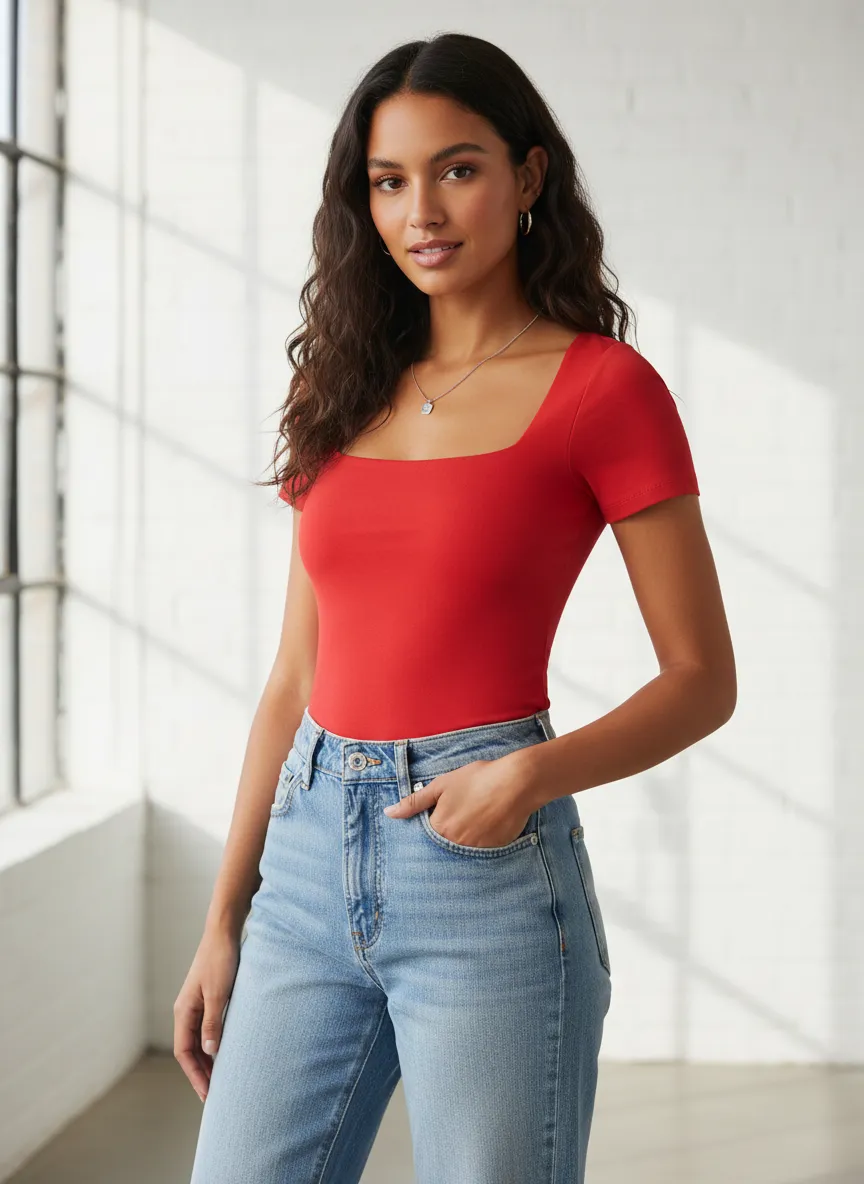
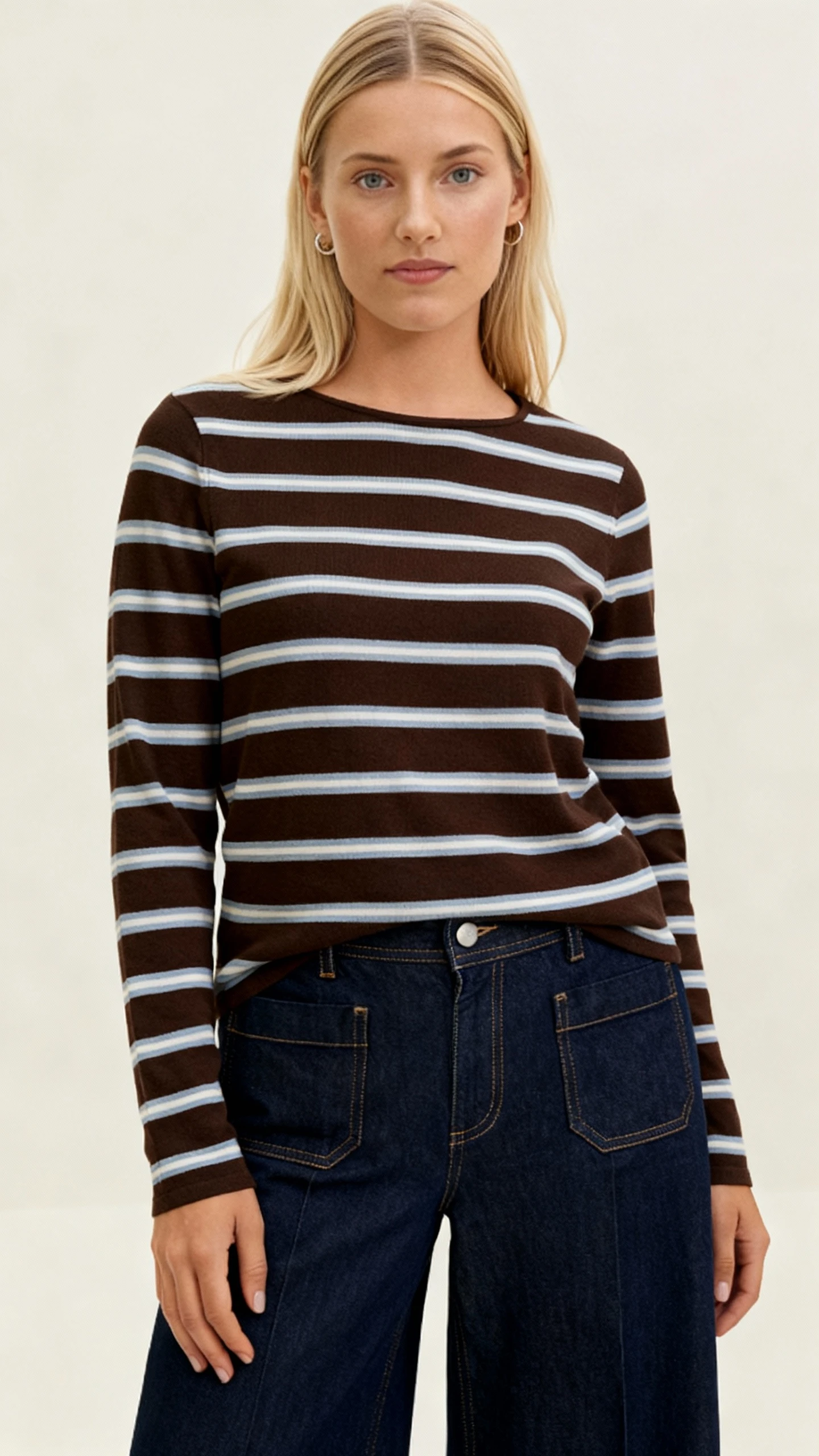
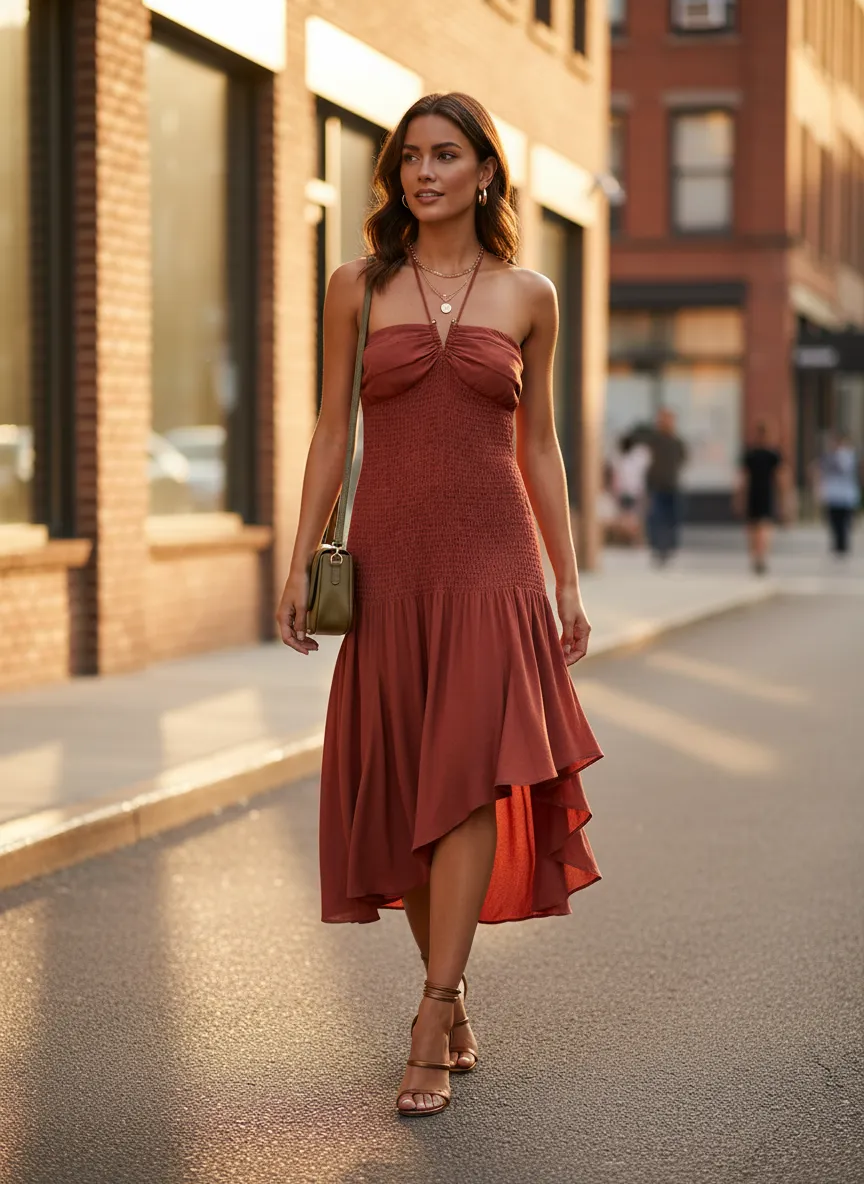
The problem in fashion e-commerce: mental simulation requires significant cognitive work. Shoppers must transpose a garment from a professional model—often 5'10", size 2—onto their own body. This mental calculation creates friction.
Virtual try-on completes the simulation automatically. Instead of asking shoppers to imagine, it shows them. The cognitive load disappears, and the path to purchase clears.
The self-reference effect describes how we process information differently when it relates to ourselves. Information encoded with personal relevance is remembered better and weighted more heavily in decisions.
Research on advertising shows that self-referencing cues lead to more positive brand attitudes and higher purchase likelihood. A virtual try-on featuring the shopper's own avatar is the ultimate self-referencing cue—it makes the entire shopping experience personally relevant.
We prefer products that match our self-concept. Seeing yourself (not a model) validates whether the garment fits your identity—reducing the "will this look good on me?" uncertainty.
Shoppers often seek to "complete" an outfit or look. Visualizing the complete picture—yourself in the garment—provides the closure needed to commit to purchase.
As we continue gathering data from customer partnerships, we expect to identify which of these psychological mechanisms drive the strongest conversion impact. The existing research provides strong directional signals; real-world implementation will refine our understanding.
The fashion industry has long relied on aspirational imagery: professional models with exceptional proportions, photographed under optimal conditions, often digitally enhanced. The assumption is that aspiration drives desire, and desire drives purchase.
Psychology research suggests this assumption may be fundamentally flawed—at least for conversion.
Self-discrepancy theory explains that when we perceive a gap between our actual self and an idealized standard, we experience negative emotions: anxiety, disappointment, self-doubt.
When shoppers view fashion on models who look nothing like them, they must constantly process this gap. The result is not aspiration—it's hesitation.
Traditional fashion advertising has operated on a troubling premise: create dissatisfaction to drive desire. Show people an unattainable ideal, and they'll purchase products in pursuit of it.
This may drive long-term brand awareness, but it actively undermines conversion. A shopper who feels inadequate is a shopper who hesitates. A shopper who hesitates abandons the cart.
Virtual try-on offers an alternative: build purchase confidence without requiring comparison to unattainable standards. Instead of asking "do I want to look like her?", the question becomes "do I like how this looks on me?"
This is not just an ethical improvement—though it is that. It's a conversion improvement. Confident shoppers purchase. Uncertain shoppers abandon.
Virtual try-on technology addresses the core problem that traditional optimization cannot reach: the inability to experience clothing before purchase. But the mechanism matters as much as the technology.
"I think this might look good on me, but I'm not sure..."
"I can see exactly how this looks on me."
Not all virtual try-on is created equal. The psychological mechanisms described—ownership, self-referencing, mental simulation—are triggered most powerfully when the shopper sees themselves, not a generic avatar or model.
Research indicates that maximizing perceived resemblance between the consumer and the model increases confidence in apparel fit and purchase intent. The closer the representation is to the shopper's actual self, the stronger the conversion effect.
While generative AI-powered virtual try-on for fashion is relatively new, the underlying technology has proven impact in adjacent categories and early fashion implementations:
Warby Parker (Eyewear)
+85%Conversion uplift for users engaging with virtual try-on feature
Eileen Fisher (Fashion, via Veesual)
+272%Conversion lift for users who engaged with mix-and-match styling tool
Shopify (Aggregate Data)
+94%Higher conversion on pages with 3D or AR content vs. those without
Fielmann (Eyewear)
2-3xConversion rate increase for sunglasses when VTO feature is engaged
Good American (Fashion)
+30-40%Conversion lift from VTO solutions showcasing diverse body types
Zalando (Fashion)
+10%Conversion uplift from early virtual fitting room pilots
Note: The eyewear category (Warby Parker, Fielmann) provides the most mature data because VTO has been standard for nearly a decade. As fashion VTO technology matures—particularly with generative AI enabling realistic fabric visualization—we expect fashion to approach similar conversion lifts.
Conversion is often a downstream effect of engagement. Virtual try-on transforms the shopping experience from a passive catalog browse into an interactive "dressing room" session—and the engagement data reflects this:
2.5-4x
More time on site for VTO users
258%
Increase in session duration (Eileen Fisher)
The logic is straightforward: higher dwell time correlates with higher conversion. A shopper who spends 10 minutes "trying on" outfits is a shopper who has mentally committed to the experience—and is far more likely to commit to a purchase.
61%
of shoppers prefer retailers that offer AR/VTO experiences
71%
say they would shop more often if AR were offered
Based on the convergence of mature VTO data (from eyewear), emerging fashion implementations, and psychological research, we project the following conversion impact ranges:
| Scenario | Conversion Uplift | Key Assumptions |
|---|---|---|
| Conservative | +15-25% | Standard implementation, moderate engagement, validation of high-intent buyers |
| Moderate (Expected) | +30-50% | Well-integrated solution, effective conversion of "fence-sitters," strong engagement |
| Aggressive | +90-200% | High adoption rate, engaged user cohort, VTO becomes primary shopping interface |
Projections based on industry research from Shopify, Warby Parker, Eileen Fisher, and behavioral economics literature. See "Generative Styling: The New Economic Engine of Fashion E-Commerce" for methodology.
For twenty years, fashion e-commerce has treated low conversion as a problem of optimization. The evidence points in a different direction: it's a problem of visualization. Shoppers cannot confidently purchase what they cannot see on themselves.
Virtual try-on addresses this by triggering the psychological mechanisms—ownership, self-referencing, mental simulation—that drive confident purchase decisions. And it does so without requiring shoppers to compare themselves to unattainable ideals.