Loading...
Loading...
Fashion e-commerce sells items. Physical retail sells outfits. Virtual try-on finally bridges this gapâwith infinite combinations at zero marginal cost.
While conversion and returns often dominate discussions about virtual try-on ROI, our research suggests that Average Order Value (AOV) expansion represents the largest untapped opportunity for fashion e-commerce. The mechanism is straightforward: VTO shifts the unit of sale from individual SKUs to complete outfits.
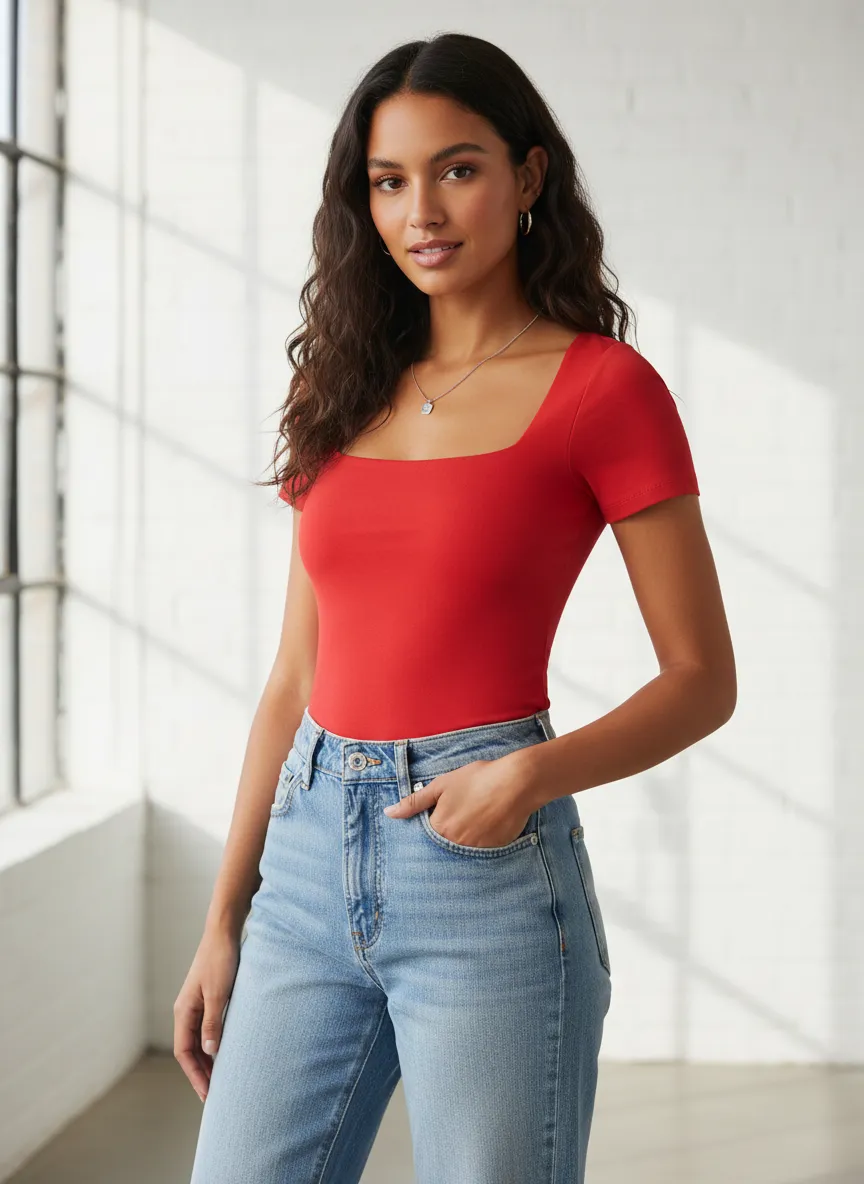
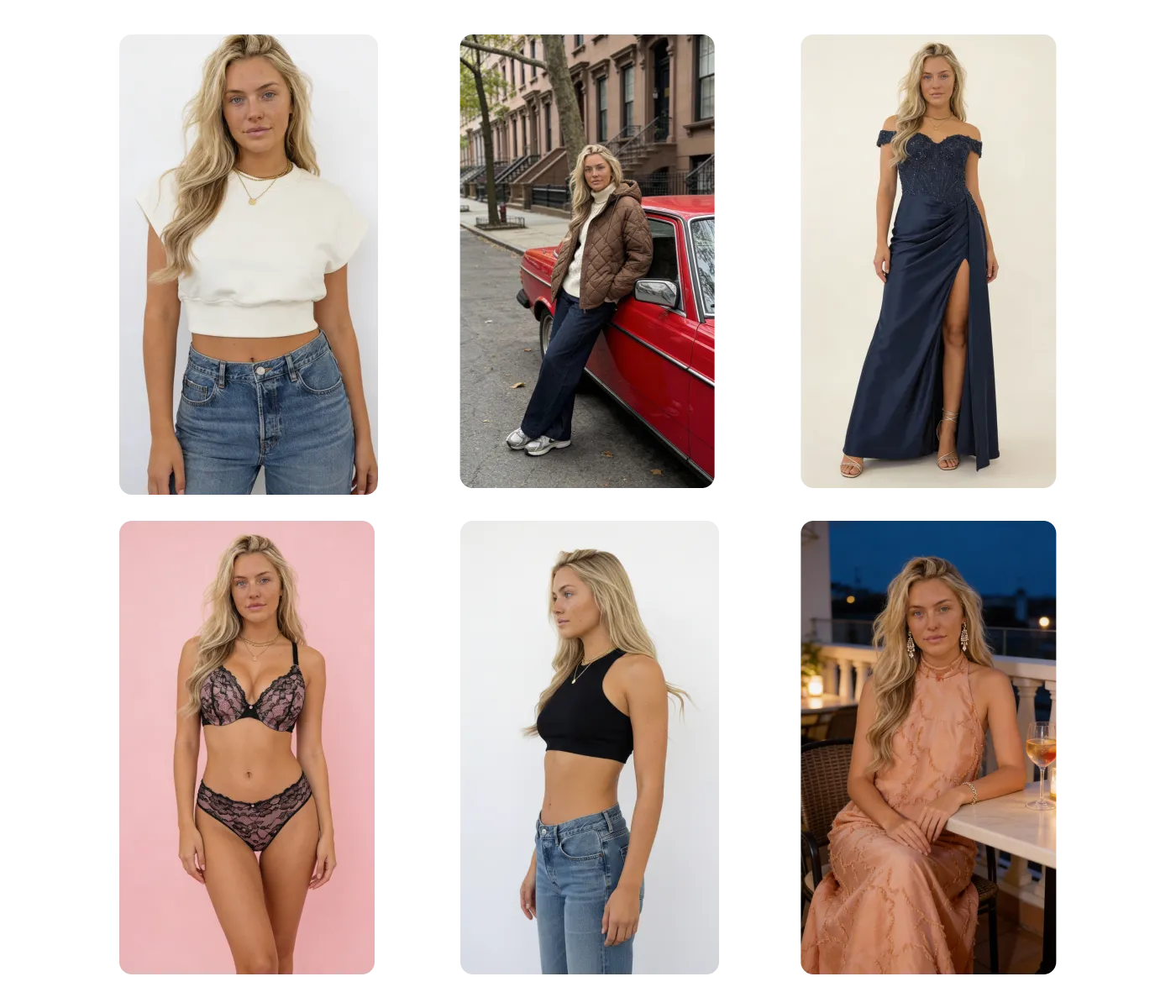
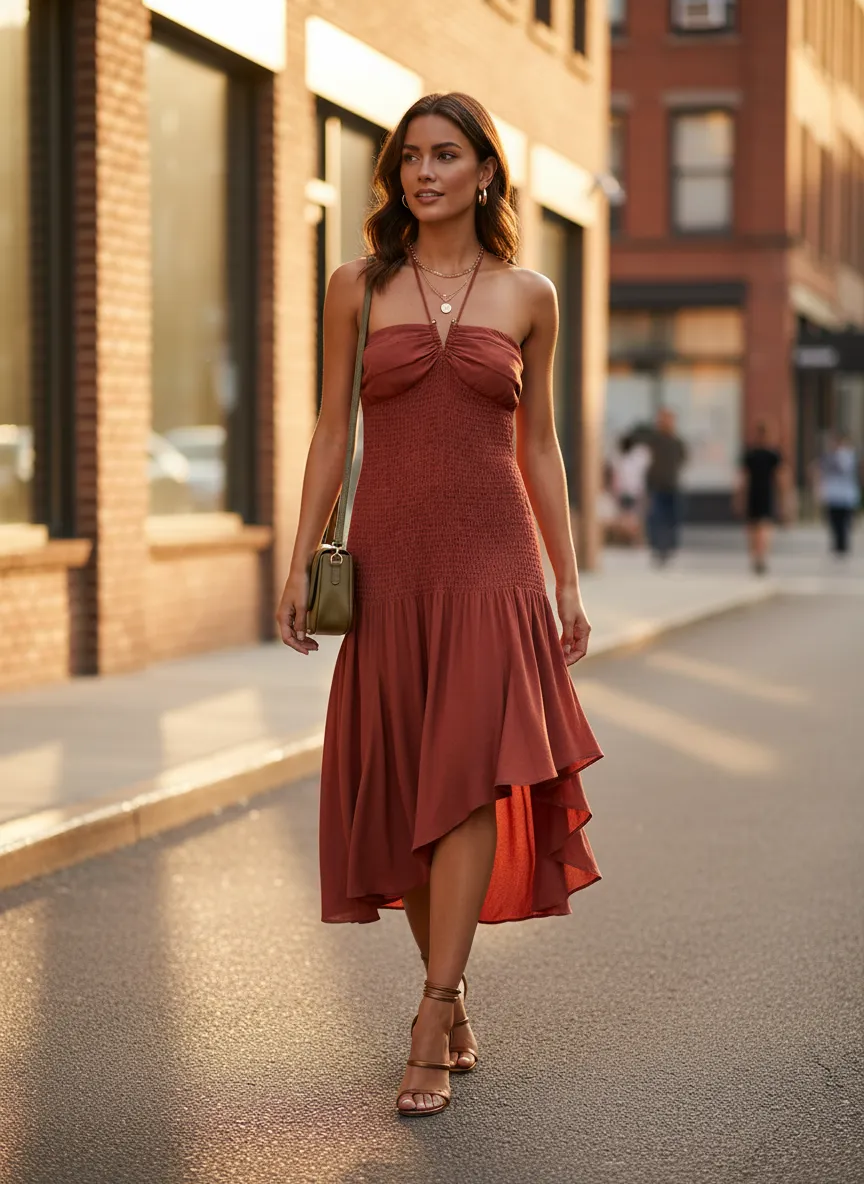
Current "Shop the Look" technologies rely on static, pre-photographed combinations to drive AOV gains. Virtual try-on removes the economic constraints of traditional photography, enabling infinite outfit combinations at zero marginal costâand critically, showing those combinations on the shopper themselves, not a generic model.
+20-40%
AOV uplift potential
+23%
Avg UPT increase (Stylitics)
$0
Marginal cost per combination
Enter your current metrics to see how outfit-based shopping could impact your average order value and total revenue.
Monthly Revenue Lift
$75K
+75% growth
Returns Avoided
$3K/mo
88 fewer returns
Annual Net Impact
$848K
Total benefit per year
*Projections based on industry research. Actual results may vary based on implementation and product category.
Walk into any physical clothing store. A sales associate approaches: "That blazer would look great with these trousers." You try them on together. You buy both. This simple interactionâthe fitting room plus human stylingâis responsible for dramatically higher Units Per Transaction (UPT) in physical retail compared to e-commerce.
Online, Product Detail Pages (PDPs) are isolated silos. A shopper browses a shirt, sees it on a model, considers the shirt alone, buys the shirt alone, and leaves. There is no context for coordination, no visualization of how pieces work together, no sales associate bringing complementary items.
The result: e-commerce sells commodities (items) while physical retail sells solutions (outfits). This structural difference suppresses AOV online.
E-commerce platforms have attempted to solve this with "Shop the Look" featuresâshowing a model wearing a complete outfit with links to buy each piece. The approach has merit, and visual bundling platforms like Stylitics and FindMine have documented real AOV gains. But the model has inherent limitations.
One Combination Per Product
Each product is photographed with one pre-selected outfit. That's the brand's best guess at what worksâbut it's only one possibility out of thousands.
Generic Model, Not the Shopper
Shoppers see the outfit on a professional model. The question "Would this look good on me?" remains unanswered.
Push Merchandising Psychology
"Here's what we want you to buy" feels like upselling. The shopper has no agency in the styling process.
Text Recommendations Lack Visual Context
"Customers also bought..." provides no explanation of why items work together. Visual proof converts; text suggestions don't.
Despite these limitations, static visual bundling still drives +20-40% AOV gains according to industry data. This suggests the underlying psychology is powerfulâthe execution has simply been constrained by technology and economics.
To understand why "Shop the Look" is limited to one combination per product, follow the economics of traditional fashion photography.
Traditional photography creates an artificial limitation: products are siloed by collection and season. The pants from Spring 2024 can only be shown with tops from Spring 2024 because that's what was shot together.
Want to show how last year's bestselling blazer pairs with this season's new arrivals? You'd need a new photoshoot. The economics make it impossible at scale.
Virtual try-on fundamentally changes the economics. Generating one outfit visualization costs essentially the same as generating one hundred. The bottleneck disappears.
â
Possible combinations
$0
Marginal cost per combination
0
Logistical constraints
| Constraint | Traditional Photography | VTO/Generative AI |
|---|---|---|
| Cost per combination | $100-500+ | ~$0 |
| Time to produce | Days to weeks | Seconds |
| Model availability | Booking required | Any body type, anytime |
| Cross-collection styling | Requires new shoot | Instant |
| Personalization | Generic model | Shopper's avatar |
The key insight: The cost of photography was the bottleneck limiting "Shop the Look" to one combination per product. Virtual try-on removes that bottleneck entirely. The entire catalog becomes combinable.
One of the most significantâand underappreciatedâcapabilities of programmatic styling is cross-collection merchandising. Traditional photography creates invisible walls between seasons, collections, and product launches. VTO tears them down.
"These pants can only be shown with this season's topsâbecause that's what we photographed together."
"Show me that 2022 blazer with the new 2025 arrivalsâon my avatar, in real-time."
Cross-Collection Styling
Pair products from any collection, any season, any year. The Spring 2023 trousers with the Fall 2025 sweater? Done instantly.
Catalog Revival
Resurface older inventory in fresh contexts. That classic blazer from two years ago can be styled with this week's new arrivalsâwithout a new photoshoot.
Dynamic Inventory Merchandising
As inventory levels change, styling recommendations adapt. Overstocked items can be actively merchandised by featuring them in more outfit combinations.
Dead Stock Activation
Items without outfit photography become stylable. Products that were "orphaned" because they weren't included in a photoshoot can now be visualized in context.
In any catalog, a small percentage of products receive extensive photography and styling. The restâthe "long tail"âsit with basic product shots only. Programmatic styling makes the entire catalog merchandisable, not just the hero products. This represents a massive untapped AOV opportunity.
The economics of VTO explain how infinite combinations become possible. Psychology explains why those combinations drive higher AOV. Three mechanisms are particularly relevant.
Cognitive closure describes the psychological desire to reach a definitive conclusionâto "complete" a mental picture. In fashion, shoppers often aren't looking to buy a shirt; they're looking to solve a problem: "I need an outfit for this event."
When a shopper sees themselves in a complete, styled outfit, they experience closure. Buying only one piece of that outfit creates psychological incompletenessâa tension that pulls toward purchasing the full look.
The implication: Showing complete outfits (not isolated items) triggers the need for closure. The outfit becomes the unit of desire, not the individual garment.
Named after the 18th-century philosopher Denis Diderot, the Diderot Effect describes a phenomenon where acquiring a new possession creates dissatisfaction with existing ones, triggering a cascade of additional purchases to achieve coherence.
Diderot received a beautiful new robe as a gift. Suddenly, his old desk, chair, and surroundings seemed shabby by comparison. He replaced them allânot out of necessity, but to restore aesthetic harmony.
In fashion context: When shoppers see themselves in a coordinated outfit, the pieces "belong together." Buying just the shirt without the matching trousers creates dissonance. The pull toward the complete purchase is not upsellingâit's coherence-seeking.
We discussed psychological ownership in the context of conversionâhow seeing yourself in a garment triggers the endowment effect. The same mechanism applies to AOV, but with a crucial extension.
When shoppers don't just view pre-styled looks but actively build their own outfitsâtrying different combinations, mixing piecesâthey develop psychological ownership not just of items, but of the outfit itself.
The distinction matters: A pre-styled look is the brand's creation. A self-assembled outfit is the shopper's creation. They feel ownership because they made the styling choices. This dramatically increases the pull toward purchasing the complete look.
Traditional cross-selling has a reputation problem. "Would you like fries with that?" feels transactionalâthe brand pushing predetermined upsells. VTO-enabled styling inverts this dynamic.
When shoppers have agency in the styling processâwhen they're discovering what works rather than being told what to buyâthe dynamic shifts from sales pressure to helpful service.
This isn't just ethically better; it's commercially better. Shoppers who feel helped, not sold to, develop stronger brand affinity and make larger purchases. The alignment between what's good for the customer and what's good for business is not coincidental.
This principle is consistent with our broader philosophy: confidence-based conversion outperforms dissatisfaction-based conversion. Building tools for discoveryânot pressure tacticsâcreates healthier outcomes for customers and better results for business.
Visual bundling and styling platforms have documented significant AOV impact. Note: these benchmarks use static images on generic modelsâpersonalized VTO should amplify these results by adding self-referencing and psychological ownership.
John Varvatos (FindMine)
+74% AOVMassive AOV increase when customers interacted with "Complete the Look" features
Huckberry (Stylitics)
+60% AOV, +60% UPTOutfit-based discovery drove equal gains in order value and units per transaction
Rhone (Stylitics)
+39% AOVAOV increase for orders influenced by styling recommendations
Perry Ellis (FindMine)
+31% AOVConsistent AOV lift from "Complete the Look" implementation
Stylitics Platform Average
+21% AOV, +23% UPTAverage performance across Stylitics client base
Eileen Fisher (Veesual Mix & Match)
+11% AOVAOV increase alongside 93% conversion lift from "The Closet" styling experience
Reactive Reality (PictoFit)
+494% Revenue Per User+7% AOV combined with higher frequency and conversion created massive compound effect
Note: The Reactive Reality case study demonstrates an important principleâAOV, conversion, and engagement effects compound. A modest AOV gain combined with strong conversion and engagement lifts can produce outsized revenue impact.
AOV gains don't exist in isolation. When combined with conversion improvements, the revenue impact is multiplicative, not additive.
| Metric | Baseline | With VTO (Moderate) | Change |
|---|---|---|---|
| Monthly Visitors | 100,000 | 100,000 | â |
| Conversion Rate | 2.0% | 2.8% | +40% |
| Average Order Value | $100 | $125 | +25% |
| Monthly Orders | 2,000 | 2,800 | +40% |
| Monthly Revenue | $200,000 | $350,000 | +75% |
A 40% conversion lift Ă 25% AOV lift = 75% total revenue increase. The effects don't add; they multiply.
Factor in return reduction (which preserves margin on those additional sales), and the net profit impact can exceed 100% improvementâwithout increasing traffic spend.
Based on visual bundling benchmarks and emerging VTO implementation data, we project the following AOV impact ranges:
| Scenario | AOV Uplift | UPT Increase | Key Assumptions |
|---|---|---|---|
| Conservative | +10-15% | +0.2-0.3 items | Baseline cross-sell, modest engagement with styling features |
| Moderate (Expected) | +20-35% | +0.5-0.7 items | Well-integrated styling, average engagement, outfit-based discovery |
| Aggressive | +40-60% | +1.0+ items | VTO as primary shopping interface, high adoption, outfit-first browsing |
Projections based on industry research from Stylitics, FindMine, Veesual, and behavioral economics literature. See "Generative Styling: The New Economic Engine of Fashion E-Commerce" for methodology.
For decades, e-commerce has been constrained by the economics of photography. "Shop the Look" was limited to one combination per product. Cross-collection styling required new photoshoots. The long tail of inventory sat unmerchandised.
Virtual try-on removes these constraints. Programmatic styling enables infinite combinations at zero marginal cost. The entire catalog becomes combinable. And critically, shoppers see these combinations on themselvesâtriggering psychological ownership not just of items, but of outfits.